After testing 20+ tools across real blogging workflows, we narrowed it down to the 10 best AI tools for bloggers in 2026. Whether you’re a beginner just starting out or a full-time blogger managing multiple sites, the right ai tools for blogging will help you write faster, rank higher, and earn more — without burning out. The best all-rounder is ChatGPT, but the ideal stack depends on your biggest bottleneck.
📋 Table of Contents
- Why Bloggers Need AI Tools in 2026
- Best AI Tools for Bloggers
- 1. ChatGPT — Best for Writing Blog Posts
- 2. Surfer SEO — Best for SEO Blogging
- 3. Claude — Best for Long-Form Content
- 4. Jasper — Best for Affiliate Blogging
- 5. Grammarly — Best for Editing & Polish
- 6. Canva AI — Best for Blog Graphics
- 7. Perplexity AI — Best for Research
- 8. RankIQ — Best for Blog Idea Generation & SEO
- 9. Notion AI — Best for Content Planning
- 10. Koala AI — Best for Beginners
- Quick Comparison Table
- Best AI Stack by Blogger Type
- FAQs
Why Bloggers Need AI Tools in 2026
Blogging in 2026 is harder than it’s ever been — and easier than it’s ever been, depending on whether you’re using the right tools. Google’s competition is fiercer. Reader expectations are higher. And the volume of content you need to produce to stay visible keeps climbing.
That’s exactly why ai tools for bloggers have gone from a novelty to a genuine competitive advantage. Bloggers using AI tools now report publishing 2–3x more content per month compared to those who don’t — without sacrificing quality. And for SEO-focused bloggers, the ranking improvements from using the right ai tools for blogging are measurable and significant.
The most useful blogging AI tools cover five areas every blogger deals with daily:
- Writing & drafting — outlines, first drafts, introductions, conclusions
- SEO optimisation — keyword research, content scoring, on-page optimisation
- Editing & proofreading — grammar, clarity, tone, readability
- Research — fast fact-checking, topic deep-dives, sourcing data
- Planning & organisation — content calendars, editorial workflows, idea generation
Best AI Tools for Bloggers
Here are our top picks — tested across real blogging niches, ranked by value, and chosen for what actually moves the needle on traffic and time savings.
ChatGPT is the most versatile of all ai tools for writing blog posts — and it’s where most bloggers should start. Use it to brainstorm 20 post ideas in two minutes, build a complete outline from a single keyword, write a first draft you can edit into shape, or generate 10 different headline variations to find the one that clicks. The blank page problem disappears completely. ChatGPT isn’t going to write your best work for you — but it’ll get you 80% of the way there in a fraction of the time, which is exactly what busy bloggers need.
✅ Pros
- Best for outlines, drafts & ideas
- Works for any niche or topic
- Generous free tier to start
- Fast — results in seconds
❌ Cons
- Output needs editing to rank
- No built-in SEO features
- Needs good prompting skills
If you’re serious about ranking on Google, Surfer SEO is the single most important blogging AI tool you can add to your workflow. It analyses the top-ranking pages for your target keyword in real time and gives you a Content Score as you write — telling you exactly which terms to include, how long your post should be, and how to structure your headings. Bloggers using Surfer consistently rank faster and higher than those writing without it. It’s the backbone of any serious ai tools for seo blogging setup, and the one tool where the ROI is clearest.
✅ Pros
- Real-time content scoring while writing
- Data-driven keyword & heading suggestions
- Integrates with Google Docs
- Keyword clustering & topic planning
❌ Cons
- Expensive for hobbyist bloggers
- No free plan
- Learning curve for beginners
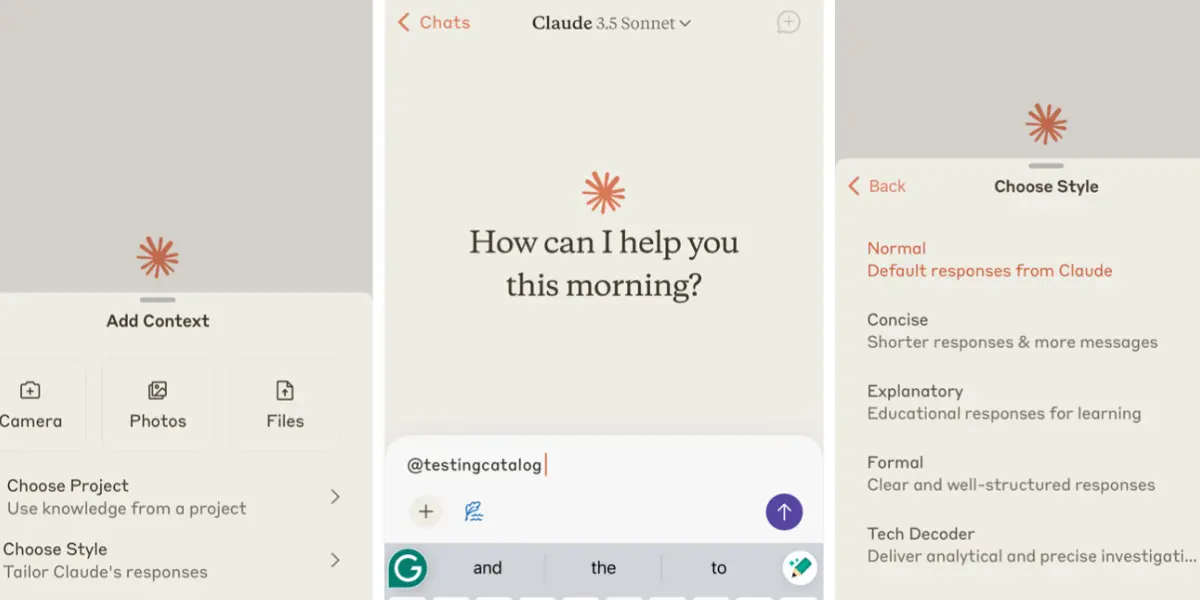
Claude is the writer’s choice among ai tools for blog content creation. Where ChatGPT is great for speed and flexibility, Claude is better for depth, nuance, and consistency across long articles. It holds context remarkably well over a 3,000-word post — meaning it doesn’t lose the thread halfway through like some AI tools do. It’s also excellent for editing existing drafts without making them sound robotic, which is one of the most underrated things a blogger needs. If you write long, research-heavy posts in competitive niches, Claude belongs in your stack.
✅ Pros
- Best for long, nuanced articles
- Holds context across full drafts
- Excellent at editing & rewriting
- Human-sounding output
❌ Cons
- No built-in SEO features
- Free plan has daily limits
- Less versatile than ChatGPT
Jasper is built for bloggers who produce content at volume — especially affiliate bloggers churning through product reviews, comparison articles, and roundup posts. Its Brand Voice feature means every article you produce sounds like you, not like a robot. It has templates specifically for blog intros, product descriptions, pros and cons sections, and call-to-action copy — all the building blocks of high-converting affiliate content. If ai tools for affiliate blogging had a top pick, Jasper would be it for anyone producing more than 10 posts a month.
✅ Pros
- Brand voice consistency
- Blog-specific templates
- Great for high-volume output
- Surfer SEO integration available
❌ Cons
- Expensive for low-volume bloggers
- No free plan
- Still needs human editing
Every blogger — regardless of how good their writing is — needs Grammarly. It’s the final polish step that catches what every other AI tool misses: awkward phrasing, passive voice, unclear sentences, tone inconsistencies, and plain old typos. The free version handles grammar and spelling perfectly for most bloggers. The Pro version adds clarity improvements, engagement scoring, and full-document rewrites — genuinely useful when you’re editing a 2,000-word post and need it tight before publishing. Think of it as the safety net under every post you publish.
✅ Pros
- Works inside Google Docs & WordPress
- Excellent free tier
- Catches errors AI writers miss
- Tone & clarity suggestions
❌ Cons
- Can over-edit your personal voice
- Not a full content creation tool
- Pro plan adds up monthly
People skim before they read. And the first thing they see — before a single word — is your featured image. Canva AI makes it genuinely easy to create professional blog graphics, featured images, Pinterest pins, and social sharing visuals without any design experience. Magic Design generates templates from a text description. Text to Image creates custom AI visuals. Background Remover works on photos in seconds. For bloggers who know they need better visuals but don’t have time to learn Photoshop, Canva is the answer — and the free plan covers most blogging needs.
✅ Pros
- Excellent free plan
- No design skills needed
- Blog & Pinterest templates
- AI image generation included
❌ Cons
- AI features limited on free plan
- Can look templated without tweaking
- Not for complex infographics
Good blogging requires good research — and Perplexity AI is the fastest research tool available for bloggers. Type in a question and it gives you a synthesised, cited answer instead of a list of links to wade through. It’s real-time, which means the data is current. For bloggers writing in fast-moving niches — tech, finance, health, marketing — this is invaluable. It also helps you find credible statistics to back up your claims, which is one of the easiest ways to improve content quality and SEO at the same time. Most blogging research tasks that used to take 30 minutes take 5 with Perplexity.
✅ Pros
- Real-time web search with citations
- Great free tier
- Much faster than traditional research
- Always up-to-date
❌ Cons
- Not for content generation
- Pro searches limited on free plan
- Can miss nuanced context
RankIQ was built specifically for bloggers — and it shows. Unlike general SEO tools, it focuses entirely on finding low-competition keywords with high traffic potential that are realistically rankable for smaller blogs. Its AI Content Brief Generator tells you exactly what to cover in each post based on what’s already ranking. For ai tools for blog idea generation and SEO, RankIQ is one of the most blogger-friendly options available — it simplifies what Surfer SEO does into a tool that doesn’t require an SEO background to use effectively.
✅ Pros
- Built specifically for bloggers
- Low-competition keyword library
- AI content brief generation
- Simpler than Surfer for beginners
❌ Cons
- No free plan
- Less powerful than Surfer for scale
- Smaller keyword database

The most underrated part of successful blogging is staying organised enough to publish consistently. Notion AI turns your entire blogging operation into a system — editorial calendar, content briefs, keyword tracking, draft status, and publication schedule all in one place. Use it to generate full content briefs from a single keyword, batch-plan a month of posts in one session, and keep your entire blog strategy organised and searchable. For bloggers managing multiple sites or a content team, Notion is the quiet backbone that makes everything else run on schedule.
✅ Pros
- All-in-one blogging workspace
- AI knows your blog context
- Great for batch planning
- Very beginner-friendly
❌ Cons
- Only useful if you adopt Notion
- AI less powerful than ChatGPT
- Can take time to set up properly
Koala AI is one of the most beginner-friendly ai tools for blogging available in 2026. You enter a keyword, it generates a fully structured, SEO-optimised blog post — complete with headings, body content, FAQs, and a conclusion — in under two minutes. It pulls real-time data from the web so the content is current, and it’s designed specifically for WordPress publishing with a one-click export. For bloggers who are just starting out or who want a fast first draft to work from, Koala is one of the best free ai tools for bloggers to explore — the free tier gives you enough to evaluate it properly.
✅ Pros
- Full blog posts in under 2 minutes
- SEO-structured output by default
- Real-time web data included
- One-click WordPress export
❌ Cons
- Output always needs human editing
- Less control than ChatGPT
- Not for deeply nuanced topics
Quick Comparison Table
| Tool | Free Plan | Paid Plan | Best For | Our Rating |
|---|---|---|---|---|
| ChatGPT | ✅ Yes | $20/mo | Writing & outlines | ⭐⭐⭐⭐⭐ |
| Surfer SEO | ❌ No | $89/mo | SEO & content scoring | ⭐⭐⭐⭐⭐ |
| Claude | ✅ Yes | $20/mo | Long-form content | ⭐⭐⭐⭐⭐ |
| Jasper | ❌ Trial | $39/mo | Affiliate blogging | ⭐⭐⭐⭐⭐ |
| Grammarly | ✅ Great | $12/mo | Editing & polish | ⭐⭐⭐⭐⭐ |
| Canva AI | ✅ Generous | $15/mo | Blog graphics | ⭐⭐⭐⭐ |
| Perplexity AI | ✅ Yes | $20/mo | Research & fact-checking | ⭐⭐⭐⭐ |
| RankIQ | ❌ No | $49/mo | Niche keyword research | ⭐⭐⭐⭐ |
| Notion AI | ✅ Notion free | +$10/mo | Content planning | ⭐⭐⭐⭐ |
| Koala AI | ✅ Limited | $9/mo | Beginners & fast drafts | ⭐⭐⭐⭐ |
Best AI Stack by Blogger Type
Not every blogger needs every tool. Here’s the best stack based on your specific situation — pick what fits and skip the rest.
🌱 Beginner Blogger
- ChatGPT (free) — drafts & outlines
- Grammarly (free) — editing & polish
- Canva AI (free) — featured images
- Koala AI — fast SEO-ready posts
💰 Affiliate / Niche Blogger
- Jasper — product reviews at scale
- Surfer SEO — content optimisation
- RankIQ — keyword opportunities
- Grammarly — final edit pass
📚 Long-Form / Authority Blogger
- Claude — deep, nuanced drafts
- Surfer SEO — on-page optimisation
- Perplexity — research & sourcing
- Grammarly — editing & clarity
🏢 Multi-Site / Pro Blogger
- ChatGPT — bulk drafting & ideas
- Surfer SEO — content scoring
- Notion AI — editorial planning
- Canva AI — visual content
AI Tools for Blog Writing and SEO
Writing and SEO are the two things that determine whether a blog post succeeds or gets buried. And the good news is — the best blogging AI tools now cover both, often in the same workflow.
For writing, the combination of ChatGPT (for speed and first drafts) and Claude (for depth and editing) covers almost every blogging scenario. For ai tools for seo content writing, Surfer SEO is the clear leader — nothing else gives you the same real-time data on what your post needs to rank. RankIQ is the more beginner-friendly alternative if Surfer feels overwhelming.
The winning workflow looks like this: use ChatGPT or Claude to write the draft, use Surfer to optimise it, use Grammarly to polish it. Three tools, one great post.
What AI Tools Do Bloggers Use?
The most widely used blogging ai tools in 2026 are ChatGPT for writing and outlines, Grammarly for editing, Surfer SEO for content optimisation, Canva AI for blog graphics, and Perplexity AI for research. Most successful bloggers use a focused stack of 3–4 tools rather than trying to use everything at once.
Affiliate bloggers tend to add Jasper for brand-consistent volume content. SEO-focused bloggers add RankIQ for keyword discovery. Beginners often start with Koala AI for fast, structured drafts they can edit and publish quickly.
Which AI Tool Is Best for Blogging?
If you can only pick one: ChatGPT. It handles outlines, first drafts, headline ideas, FAQs, and meta descriptions — the full range of what a blogger needs to write. If SEO is your focus and you’re serious about ranking: Surfer SEO. If you write long, nuanced posts: Claude. If you’re just starting out and want the fastest route to a publishable post: Koala AI.
Can AI Help Bloggers Write Faster?
Yes — significantly. Here’s what the time savings look like in practice. A blog post that used to take 4–5 hours from research to publish typically takes 1.5–2 hours with a solid AI workflow. Research is faster with Perplexity. Outlines are instant with ChatGPT. First drafts take minutes. Editing is tighter with Grammarly. SEO optimisation is data-driven with Surfer.
That’s not cutting corners — it’s removing the parts of blogging that don’t require human expertise, so you can spend more time on the parts that do: your perspective, your examples, and your genuine insights.
Are AI Tools Worth It for Bloggers?
Yes — particularly for bloggers who depend on traffic for income. The ROI is clearest when you think about it this way: if AI saves you 3 hours per post and you publish 4 posts a month, that’s 12 hours back every month. At any hourly rate, that’s worth far more than the $20–40/month you’d spend on a basic AI stack.
For affiliate bloggers and niche site builders, the ROI is even clearer — more posts published means more keywords targeted, more organic traffic, and more affiliate revenue. AI tools for content optimisation like Surfer directly improve your ranking speed, which compounds over time.
How Do Bloggers Use AI?
The best AI-assisted blogging workflow in 2026 looks like this:
- Keyword research — Use RankIQ or Surfer to find a target keyword with good traffic and low competition
- Idea & outline — Generate a full content outline in ChatGPT based on the keyword and search intent
- Research — Use Perplexity AI to find current stats, examples, and sources to strengthen the post
- First draft — Write the draft in ChatGPT or Claude, then rewrite key sections in your own voice
- SEO optimisation — Run the draft through Surfer SEO to hit the Content Score and add missing terms
- Edit & polish — Final pass with Grammarly for grammar, clarity, and readability
- Visuals — Create featured image and any supporting graphics in Canva AI
- Publish — Hit publish. What used to take a full day now takes two hours.
Frequently Asked Questions
🏆 Final Verdict
The best AI tools for bloggers in 2026 aren’t about replacing your voice or your expertise — they’re about removing the friction that slows you down between idea and published post.
If we had to pick just three for every blogger to start with today: ChatGPT for writing and outlines, Grammarly for editing, and Surfer SEO for content optimisation. Add Canva AI for visuals and Perplexity for research when you’re ready. That full stack costs around $130/month — and will easily double your publishing output.
Start with ChatGPT and Grammarly — both have free plans. Build the habit. Then invest in Surfer once you’re publishing consistently and want to rank faster. That’s how bloggers go from grinding to growing.
Found this helpful? Share it! 🙌